Support the Cause
FREE THE NIPPLE
Walk down any street, scroll through any social media feed, or sit on any beach, and you will quickly notice a glaring, universally accepted paradox: a man can take his shirt off without a second glance, but if a woman does the same, she risks arrest, censorship, or public shaming. Why? Because of a single, biologically identical anatomical feature: the nipple.
Born from a 2012 documentary by filmmaker Lina Esco, who ran through the streets of New York City topless to challenge these exact norms, the #FreeTheNipple movement has evolved from a provocative campaign into a global crusade for gender equality. But to dismiss the movement as merely a push for public toplessness is to miss its profound, transformative core. At its heart, Free the Nipple is about dismantling the hyper-sexualization of the female body, challenging archaic double standards, and reclaiming the fundamental right to bodily autonomy.
The Anatomy of a Double Standard
The most basic argument of the movement is rooted in simple biology. Male and female nipples are anatomically the same. Yet, society has drawn a rigid, heavily policed line between the two. The male chest is viewed as neutral, natural, and default. The female chest, however, has been culturally hijacked, reduced almost entirely to a sexual object, and stripped of its natural, biological purposes—most notably, nourishing infants.
This double standard is enforced not just by social stigma, but by institutional censorship. For years, social media giants have banned images of the female nipple, even in deeply non-sexual contexts such as a mother breastfeeding, a survivor showing her mastectomy scars, or an activist protesting for equality. Meanwhile, male nipples are permitted freely. The movement asks a vital question: Why do we teach society to view a natural part of the human body as inherently obscene, and why is that burden placed exclusively on women?
De-sexualizing the Female Form
A common misconception is that the Free the Nipple movement is inherently sexual. In reality, it is the exact opposite. The movement seeks to de-sexualize the female body.
By fighting for the right to be topless, activists are challenging the deeply ingrained “male gaze” that dictates women’s bodies must always be covered to prevent “distracting” or “tempting” others. The movement asserts that a woman’s body is not inherently scandalous. It demands a cultural shift where a topless woman is seen simply as a human being existing in her natural state, rather than a sexual provocation. It is about separating the female form from the constant, exhausting expectation of sexual availability and objectification.

A Matter of Choice and Consent
Crucially, Free the Nipple is not about forcing or obligating women to go topless. It is about choice.
True bodily autonomy means having the power to decide what happens to your own body, free from coercion or societal penalty. If a woman chooses to wear a bikini, a t-shirt, or nothing at all on her top half, that choice should be hers alone. The movement fights for a world where a woman is not policed, shamed, or legally penalized for the amount of fabric she chooses to drape over her skin. It is about shifting the focus from what women wear to how society respects them, reinforcing that a woman’s clothing choices are never an invitation, nor is her lack of clothing a justification for disrespect.
Intersection with Body Positivity and Real-World Impact
The movement is deeply intertwined with body positivity. Just as the fight for diverse bodies in bikinis challenges the “ideal” aesthetic, Free the Nipple challenges the idea that only “perfect” bodies are allowed to be seen. It creates space for women of all sizes, ages, and physical abilities to exist comfortably in their skin.
Furthermore, the movement has tangible, real-world impacts. It has successfully advocated for mothers who simply want to breastfeed their children in public without being told to “cover up” in a bathroom. It has provided a platform for breast cancer survivors to show their post-mastectomy bodies proudly, without feeling the need to hide their scars. Legally, the activism has led to the overturning of discriminatory public indecency laws in numerous cities, states, and countries, establishing legal topless equality for all genders.
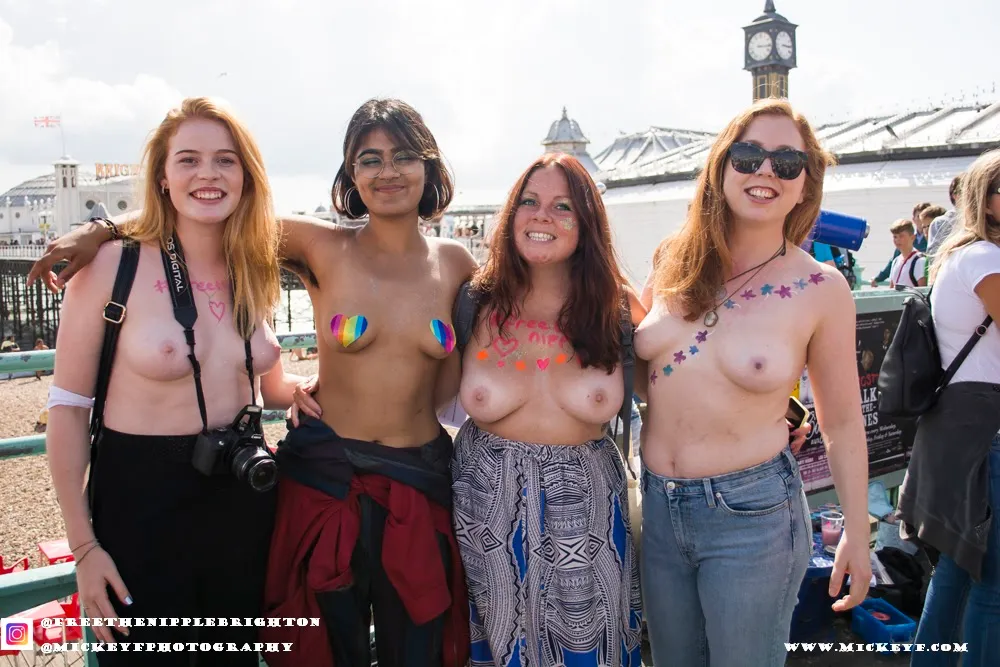
The Free the Nipple movement is ultimately about radical, unapologetic equality. It is a refusal to accept a world where women’s bodies are treated as public property to be regulated, censored, and shamed.
When we free the nipple, we are not just freeing a piece of anatomy; we are freeing women from the exhausting burden of constant bodily surveillance. We are declaring that the female body is not a scandal to be managed, but a natural, powerful, and beautiful reality to be respected. Until the day comes when a woman can exist in her own skin without the weight of double standards, the movement remains a vital, vibrant, and necessary fight for true liberation.